This Disability History Month, we had the joy of chatting with Charlotte Moroney, the Communications Manager at Amaze, who has seen 20 years of change both at the charity and in society’s understanding of disability.
Tell me about the journey Amaze has been through, how did it begin and how has it changed over the years?
When Amaze first began in 1997 in Brighton, it was formed by two parent-led organisations who came together to make sure that other parents were better informed and supported than they had felt when their journey started.
Amaze launched with a helpline, factsheets and some written resources, including a weighty handbook called Through the Maze that was given to parents when their child was diagnosed. Not long after, we started providing advice on claiming disability benefits too.
Since then, both the way we give our information to families and the support we offer has increased and diversified.
For example, that handbook no longer exists, but our website is a huge online information hub about anything and everything to do with SEND, and we get our information out to parents via social media and a regular newsletter. We also provide a host of additional services from workshops to support groups and a leisure discount card.
But it’s perhaps in the communities we serve and the geography of our work that we have seen the most change.
Since 2015 we’ve been offering services directly to young people with special educational needs and disabilities up to 25, and in 2017 we started to work in East Sussex as well as Brighton and Hove. This growth in who we support and where we work has really changed our perspective and enriched us as an organisation.
How do you see this change in the way you work?
I think, 20 years or so ago, when parent carers were our only focus, it was inevitable that our understanding or language around disability was often negative. We were trying to get services to understand how hard the lives of our families were, how much support they needed and how challenging life was.
Since Amaze has been working directly with young people with SEND, we’ve really changed our perspective.
We also get the chance to hear how young people feel about the issues that matter to them. Their voice has joined the parent voice in shaping how we talk about and understand disability and this has meant a shift to a more disability positive perspective. We’ve moved from perhaps looking at disability as a problem that needs solutions to a difference that needs understanding and celebrating. And this disability-positive or neuro-affirmative approach is reflecting broader moves in society to celebrate difference and individuality, to recognise strengths not deficits.
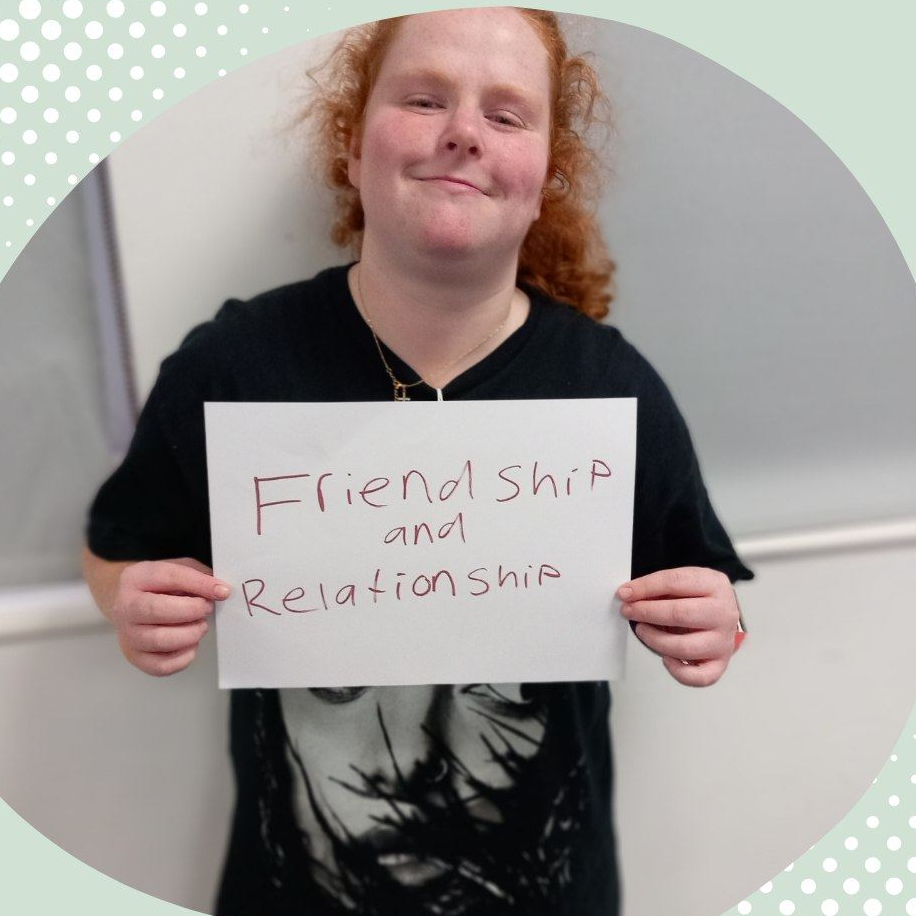
Our Amazing Futures peer support groups give disabled young people in Sussex somewhere to make friends, have fun and, “just be themselves”.
What about changes in language?
The language we use to describe disability and difference has changed since 1997! Back then, phrases like special needs or challenging behaviour were common. Today, we try and avoid phrases that suggest disabled or neurodivergent people are lacking in something (deficit language) and instead choose positive terms or terms that relate to the society around them. For example, we would not describe a child as having challenging behaviour; we would instead talk about distressed behaviour or behaviour that challenges those around them. And we regularly review our language together with parents and young people to make sure we are getting it right.
Mental Health and the SEND Journey
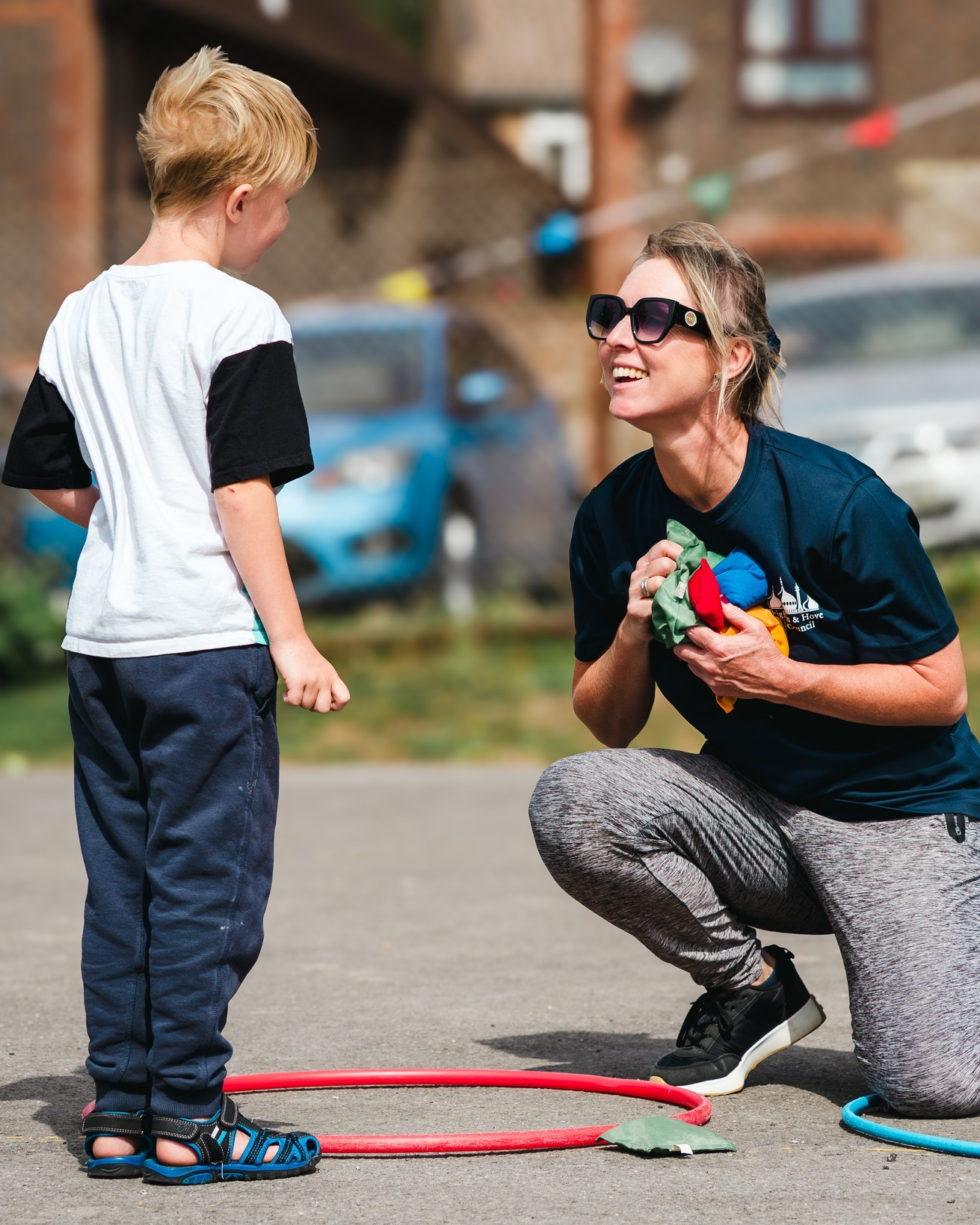
Caring for a child or young person with SEND can bring enormous love, connection and pride and it can also affect parents’ and carers’ mental health. Many families Amaze supports experience long waits for assessments, complex systems to navigate, financial pressure, isolation, sleep disruption, or the emotional weight of advocating day after day. Young people with SEND can also face anxiety, low confidence, social exclusion and stress from environments not designed for their needs.
Amaze’s work is therefore deeply connected to mental and emotional wellbeing. Their peer groups reduce isolation. Their information reduces uncertainty and stress. Their youth spaces build belonging, which is protective for mental health. And their partnership with UOK ensures that families and young people have direct routes into mental health support when they need it.
A disability-positive approach is not just about rights or inclusion, it is also about nurturing the emotional wellbeing of families and young people so they can flourish.
Looking to the future
Above all, Amaze wants to keep supporting parent carers and young people to expect and get better lives. Our recently updated Vision is “an inclusive community where disabled people, and their families, belong and flourish”.
Unfortunately, the path to that vision is no less challenging nearly 30 years on from our launch. Funding is tighter than ever, waiting lists for services are too long and upcoming reforms to the SEND system are making people feel very anxious.
So, understanding what families need and how we can best deliver it is even more important than ever. We recently published our strategic plan to 2030. In this, we commit to keep providing services for parent carers and young people that help them navigate the SEND world and feel less alone, and to work specifically to prepare disabled young people for adulthood. We also acknowledge that we will best succeed by working in partnership with other organisations in Sussex to build capacity, improve understanding, shape services and grow our reach. A great example of this is our recent inclusion in the UOK Brighton & Hove mental health and wellbeing partnership, led by Southdown.
Of course, we’ll need a secure financial foundation to do any of this, so we are working on lots of new and exciting ways to raise funds and enlist support. We’ll be launching our first ever sculpture trail in Brighton in 2026, in association with Wild in Art. During The Story Trail, over 30 benches will appear at locations across the city and we’re inviting local businesses, artists and education settings to take part. And we’re developing the trail together with our community to ensure it’s engaging and accessible.
This is a perfect example of something that has remained constant for Amaze over the years. Parent carers and young people are at the heart of everything we do – any changes or developments will always be led and shaped by them, the community we support. We exist and grow because of the lived experience of parents and young people, and it’s great to remember and celebrate that in Disability History Month.